$20 Federal Minimum Wage Bill: Proposed, Not Law
Gallego's $20 federal minimum wage bill is a proposal, not law. The federal floor is still $7.25.
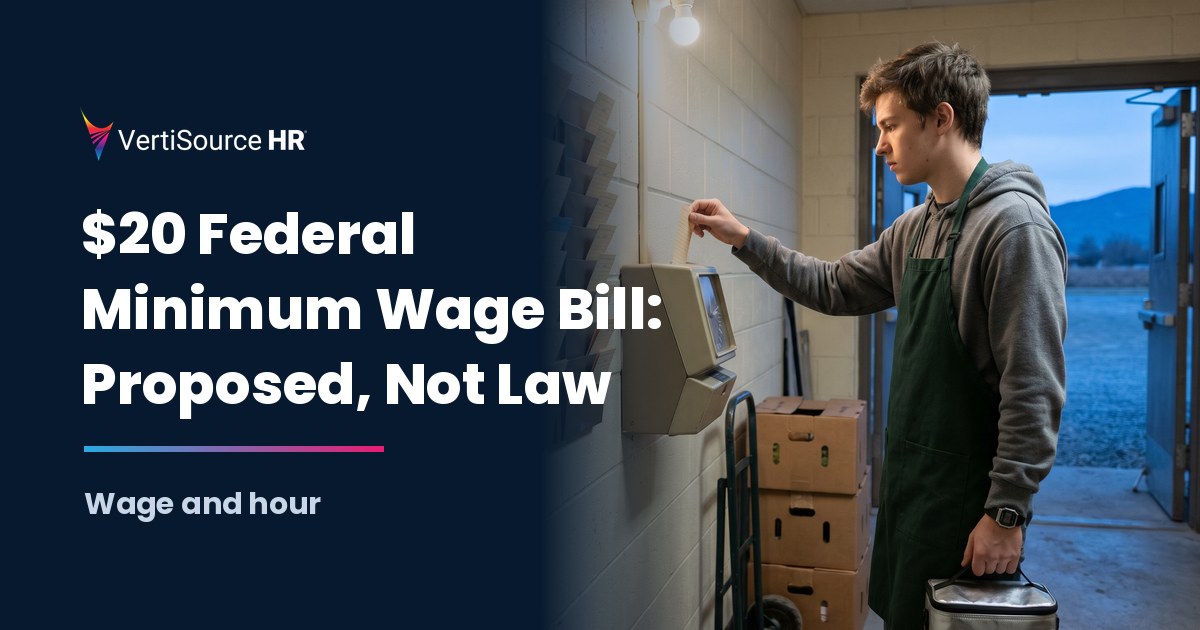
Senator Ruben Gallego’s plan for a $20 federal minimum wage drew news coverage in October 2026, but it is a proposal, not a law.
Proposed, not law
The Give America a Raise Act (S. 3780 in the Senate, H.R. 7471 in the House) was introduced in February 2026 and referred to committee.
What is the $20 bill, and where does it stand?
Senator Gallego introduced S. 3780, the Give America a Raise Act, on February 4, 2026. Representative Norcross introduced the House version, H.R. 7471, on February 10, 2026, and it was referred to the House Committee on Education and Workforce.
The Arizona Daily Independent describes Gallego’s plan as phasing in from 2027 and reaching $20 by 2030. The bill text does not name calendar years. Its steps count from an effective date, which is the first day of the third month that begins after the bill is enacted. So the years depend entirely on when, or whether, it becomes law.
How would the steps work if it passed?
As introduced, the bill raises the standard federal minimum wage in four steps and the cash wage for tipped employees in seven.
| When (if enacted) | Federal minimum wage | Tipped cash wage |
|---|---|---|
| Effective date | $10.00 an hour | $6.00 an hour |
| 1 year after | $13.00 an hour | $8.00 an hour |
| 2 years after | $16.50 an hour | $10.00 an hour |
| 3 years after | $20.00 an hour | $12.50 an hour |
| 4 years after | Raised yearly by CPI or GDP growth | $15.00 an hour |
| 5 years after | Raised again on the CPI or GDP formula | $17.50 an hour |
| 6 years after | Adjusted again on that formula | $20.00 an hour |
From four years after the effective date, the Secretary of Labor would set the standard rate each year by the greater of the yearly increase in the Consumer Price Index or in GDP. After the tipped cash wage reaches $20.00, it would follow the standard minimum wage.
The bill also changes the youth rate. Under federal law, employers may pay employees under 20 at least $4.25 an hour for their first 90 consecutive calendar days, unless state or local law prohibits it, and may not displace other employees, including by cutting their hours, wages or benefits, to hire at that rate. As introduced, the bill would start that rate at $6.00 and raise it by up to $2.00 a year until it matches the standard minimum wage. California makes no distinction between adults and minors in paying the minimum wage, so the federal youth rate is not an option for California employees.
Which minimum wage do you pay where employees work?
The Department of Labor says some state laws provide greater employee protections and employers must comply with both. In practice, that generally means paying the higher rate where you have employees.
| Where employees work | Minimum wage rate |
|---|---|
| Federal floor | $7.25 an hour since July 24, 2009 |
| Utah | Consistent with federal law: $7.25 an hour |
| California, from January 1, 2027 | $17.40 an hour statewide |
Utah’s rules set a cash wage of at least $2.13 an hour for tipped employees when tips are credited toward the minimum wage. California is stricter: an employer may not use an employee’s tips as a credit toward the minimum wage.
In California, the Department of Industrial Relations says the statewide minimum rises to $17.40 an hour on January 1, 2027, already above the bill’s first three steps. Some California cities and counties have higher local rates, and where one applies, employers must comply with the higher local rate. Separate industry rates also apply to some employers, such as fast food and certain health care workers; see our explainer on the fast food minimum wage under AB 1228. Our guide to California’s 2026 state, local and industry rates covers the rates that took effect January 1, 2026.
If you have employees in other states, check each state’s labor agency for its January 2027 rate.
What should employers do now?
Nothing changes in payroll because of the federal bill. The work with a date on it is any state or local increase that takes effect January 1, 2027.
In California, include piece-rate workers too, since they must also be paid at least the minimum wage.
How VertiSource HR handles this for clients
VertiSource HR runs payroll and payroll tax for clients, with time and attendance synced so approved timesheets flow into the next payroll run and overtime is calculated by state. When an applicable minimum wage changes, VertiSource HR makes the payroll rate changes for clients and makes sure they take effect on time.
Sources: S. 3780, Give America a Raise Act (as introduced); H.R. 7471, Give America a Raise Act (as introduced); U.S. Department of Labor, Minimum Wage; U.S. Department of Labor, Fact Sheet #15: Tipped Employees Under the FLSA; California DIR, minimum wage set to increase to $17.40 on January 1, 2027; California Labor Commissioner, Minimum Wage Frequently Asked Questions; Utah DWS, Employee Rights and Utah Wage and Employment Standards; Arizona Daily Independent, Gallego’s $20 Federal Minimum Wage Plan Draws Criticism.
Questions employers ask
Is the federal minimum wage going up to $20 in 2027?
If my state’s minimum is higher than the federal rate, which do I pay?
Would the bill change the pay of tipped employees?
Disclaimer: This content is for general informational and educational purposes only and does not constitute legal, tax, accounting, or professional advice. Consult a qualified attorney or licensed advisor before making employment, payroll, or compliance decisions. VertiSource HR disclaims all liability for actions taken or not taken based on this material.
Have a question on this?
Talk to the VertiSource HR specialist who handles legal news & compliance work every day. No script, no sales drip.
Get your free HR review