 HR Insights
HR, payroll & compliance, decoded for small business.
Playbooks and rule-change breakdowns from the specialists who run payroll, benefits, and compliance every day. Written to be used, not skimmed.
- 185 articles
- 50 states covered
- 19+ years in business
- Legal News & Compliance Trump Account auto-enrollment is complete: employer rules
- Benefits & Compensation Trump Accounts: the $1,000 head start for kids born 2025 through 2028
- Compliance Watch Compliance Watch, Issue 01: 12 employment rule changes
- Compliance Wire Federal contractor disability requirements change September 21
- Compliance Wire DOL: a mid-day commute the employee asked for is not paid time
- Compliance Wire Tobacco surcharges: agencies won’t penalize plans that drop the charge going forward
- Compliance Wire DHS proposes a $103,265 H-1B petition fee
- Compliance Wire EEO-1 reporting may be on the way out
Compliance guidance for all 50 states. Filter the library by topic, keyword, or state.
Trump Account auto-enrollment is complete: employer rules
A parent or guardian must claim an automatically enrolled account before employers can contribute; employer contribution regulations are still proposed.
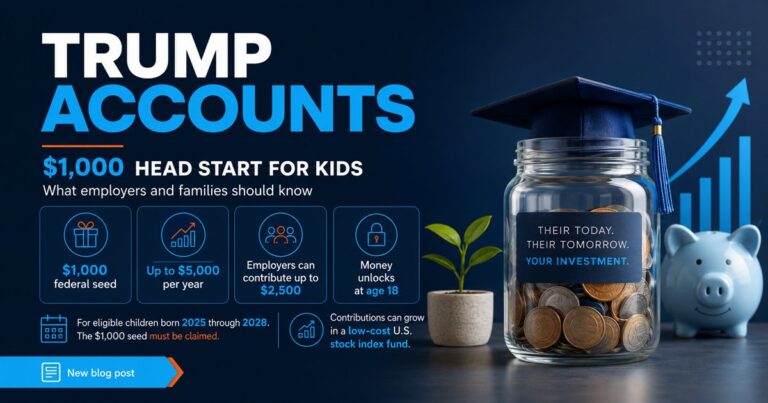
Trump Accounts: the $1,000 head start for kids born 2025 through 2028
Trump Accounts give eligible kids born 2025 to 2028 a $1,000 federal seed, and families can add up to $5,000…
Compliance Watch, Issue 01: 12 employment rule changes
Rules already in effect in Massachusetts, Washington and New Jersey, plus a September 21 change for federal contractors.

Why seven unpaid minutes before a shift can cost years of back pay
The few minutes your team works before the paid shift starts can be wages you owe, and the penalties stack…

California Local Minimum Wages Set to Rise July 1, 2026
California local minimum wage rates change July 1, 2026. Confirm work locations, remote addresses, and industry rate codes before payroll…

California’s WVPP Annual Review: 7 Records to Pull Before Cal/OSHA Asks
Build the evidence packet that links your plan revision, training roster, and incident log before your second annual cycle closes…

The $80 drug test that can cost Utah employers up to $160 each
Six Utah bills took effect in May 2026, and one of them turns a routine drug-test reimbursement into a per-day…

Why a four-minute late lunch in California can cost you an hour of pay
A meal break that starts after the fifth hour can trigger an hour of premium pay in California, absent a…

California Pay Data Reports Are Due May 13. Your HRIS Needs the Pay Decision Record.
California Reporting Year 2025 pay data is due May 13, 2026. Build the proof trail in HRIS, payroll, and recruiting…

California SB 68 turns the menu into a recordkeeping problem
California SB 68 takes effect July 1, 2026, for restaurant chains with 20+ locations. The kiosk, the QR destination, and…

If a PAGA notice gets more specific, your records must too
LWDA’s PAGA proposed regs push toward structured, fact-specific notices. Use a proof-packet workflow to respond faster and cure smarter. April…

Form I-9 Updates 2026 That Break the Usual Fix-It Workflow
ICE’s March 2026 I-9 guidance reclassifies several Section 1 omissions as substantive violations. Fines run $288 to $2,861 per form…
The Compliance Brief
One email a month. The deadlines that matter to employers.
Rule changes, filing deadlines, and the action items behind them, written by the specialists who handle this work for U.S. employers. No marketing drip.
Join business owners and HR leaders. Unsubscribe anytime.